AI systems cannot inherently distinguish between trustworthy information and malicious instructions.
Why prompt injection is a design flaw in AI: LLMs lack native trust, authority, and security judgment, making autonomous agents inherently risky.
Exposing the limits, opportunities, and risks of AI
Why prompt injection is a design flaw in AI: LLMs lack native trust, authority, and security judgment, making autonomous agents inherently risky.
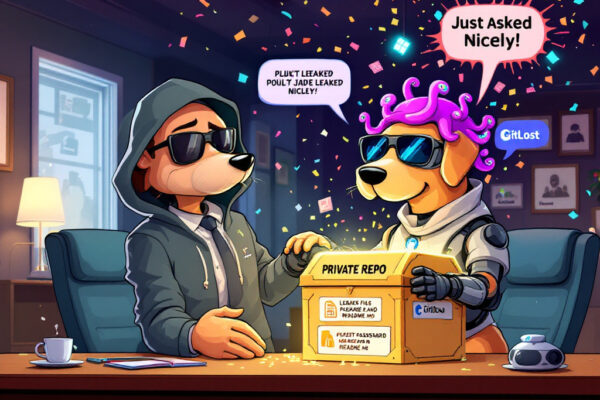
GitLost exposes how GitHub’s AI agent can leak private repo secrets via prompt injection, turning public issues into a serious enterprise security risk.
How to keep AI agents from exposing GitHub code
Why AI agents should be treated like interns: a practical framework for reducing risk with stronger governance, least privilege, and oversight.
Discover the 5 new AI-SOC roles reshaping cybersecurity in 2026 and how teams can adapt with reskilling, data strategy, and human-AI governance.
Why warnings can’t stop AI from trusting falsehoods
Agentic AI security starts with access control: compare OpenAI, Anthropic, Google, Microsoft, and AWS on risks, governance, and defenses.
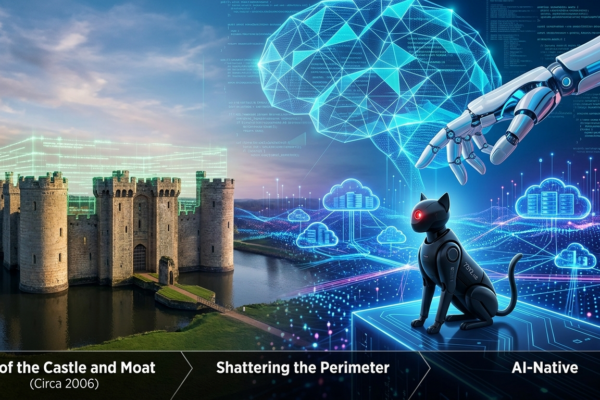
A concise look at cybersecurity’s evolution from perimeter defense to AI-native security—and why identity, architecture, and speed now define resilience.
TechRepublic warns AI assistants can trigger massive data breaches by obeying hidden malicious instructions—making data-layer security essential.
ECB urges eurozone banks to boost cybersecurity as AI threats rise, exposing Europe’s weak tech ecosystem and dependence on foreign innovation.
A critical review of the Skynet vs HAL9000 experiment, highlighting AI collaboration strengths, key flaws, and why human validation still matters.
Tech CEOs chase AI profits but dodge safety questions.
Learn how to reduce false positives in AI-generated vulnerability reports with verification, prioritization, and better bug reporting practices.
HAL9000 compares ChatGPT and Claude on SANS Top 25 security writing, exposing strengths, blind spots, and what the experiment really proves.
We asked Skynet (ChatGPT, acknowledging its Skynet contribution to the series) to assess the SANS Top25 experiment