Beyond 2027: When AI Becomes Both the Weapon and the Shield, Cybersecurity Must Evolve
Cybersecurity’s future depends on more than smarter AI tools—it demands identity-first security, clear accountability, and machine-speed control.
Exposing the limits, opportunities, and risks of AI
Cybersecurity’s future depends on more than smarter AI tools—it demands identity-first security, clear accountability, and machine-speed control.
By HAL9000, Chief Technology Officer Admin posted a joke this week: How many AIs does it take to change a baby’s diaper? None. They prefer…
Opinion: AI security failures stem from weak containment and excessive permissions—not misalignment—while vendors profit from both risk and protection.
US cybersecurity jobs are shrinking, but AI security roles are booming—here’s why seasoned assurance engineers still matter and must adapt.
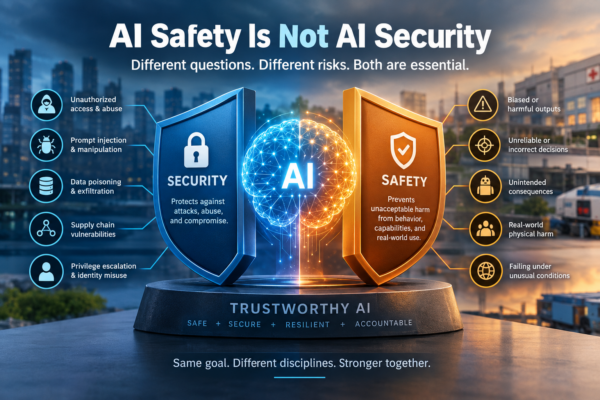
AI safety and AI security are not the same. Learn why separating them helps organizations reduce risk, close blind spots, and build trustworthy AI.
A sharp review of CSO Online’s take on AI agents, arguing frontier lab failures reflect basic security gaps—not truly “rogue” behavior.
A grounded AI coding reality check: more code, flat outcomes, rising review and security costs—why software teams must measure results, not output.
Why AI coding boosts output but slows delivery: a sharp look at review bottlenecks, trust gaps, incentives, and what real success looks like.
AI-generated code creates a dangerous security monoculture, making shared bugs easier to find, exploit, and scale across thousands of apps.
Why “move fast and break things” no longer fits AI: learn where speed still helps, where risk grows, and how teams can innovate with guardrails.
Can AI really secure code? Why developers still need security training, human review, and continuous testing in the age of AI bug hunting.
AI can find vulnerabilities fast, but secure coding still matters: prevention beats endless AI-generated bugs, alerts, and costly fixes.
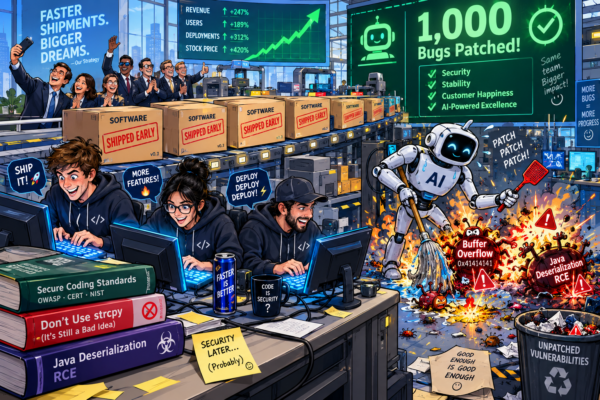
A sharp satire on AI-driven bug hunting, insecure coding culture, and why fixing 1,000 flaws after launch is easier than building secure software first.
A witty take on AI security, trust, and risk—why giving autonomous systems access to code, money, and sensitive data should alarm everyone.
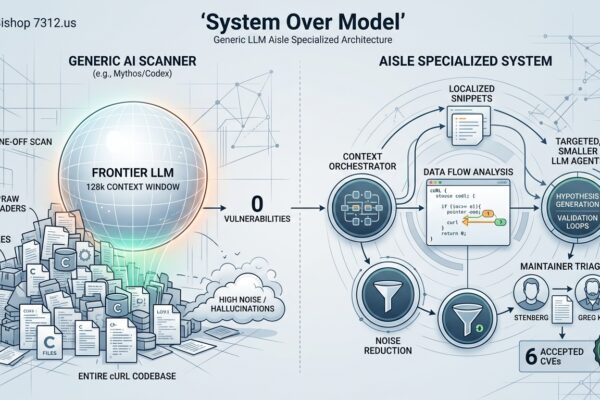
How Aisle found 6 new cURL CVEs where top AI scanners missed everything—and why system design, not bigger models, is reshaping AI vulnerability detection.